

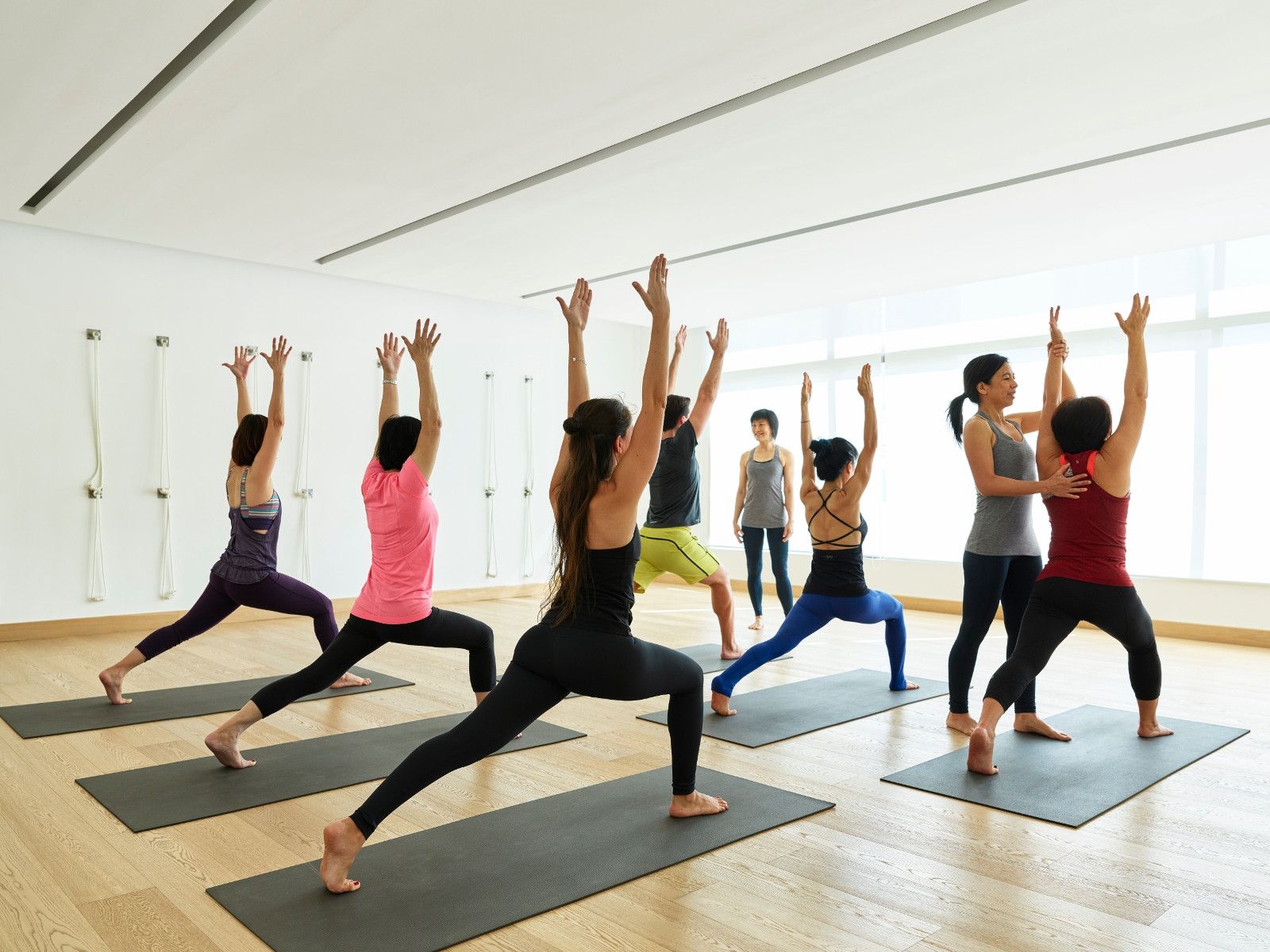
Flexibility is often treated as an automatic advantage in yoga-based exercise. However, being able to access a large range does not mean that the body can control that range effectively. People exploring yogalates singapore may find the combination of yoga-inspired positions and Pilates-style control particularly useful when mobility is already available but stability is inconsistent.
The objective is not to become less flexible. It is to develop the strength, awareness and coordination needed to enter, maintain and leave flexible positions without relying heavily on passive structures.
Flexibility and Control Are Different Capacities
Flexibility generally refers to how far a joint or group of joints can move. Control describes the ability to manage that movement using coordinated muscular effort.
A flexible participant may reach the floor easily in a forward fold but struggle to return without momentum. Someone may place a leg high during a standing pose yet lose pelvic position as soon as hand support is removed.
These examples do not prove that a person has a medical condition or unstable joints. They simply show that available range and usable range may differ.
Yogalates can make this difference easier to recognise because participants move between yoga-based ranges and more targeted control exercises.
Passive Range Can Conceal Strength Gaps
A pose may feel comfortable when the floor, a hand or a joint position supports the body. The difficulty becomes clearer when that support is reduced.
For example, someone may move deeply into a wide-legged fold but find it difficult to lift the leg sideways without leaning. The passive range is present, but the muscles responsible for moving and stabilising the hip may not control the same range.
Similar patterns can appear around the shoulders. A participant may reach the arms far overhead while allowing the ribs and lower back to move substantially. When asked to maintain a more organised trunk position, the available shoulder range may appear smaller.
The smaller controlled range is not a regression. It is a more accurate starting point for strength development.
Trunk Control Does Not Mean Constant Bracing
Participants sometimes respond to stability cues by tightening the abdomen as strongly as possible. This can make breathing difficult and movement rigid.
The trunk needs to transfer force between the upper and lower body while adapting to different positions. Effective control allows the ribs, spine and pelvis to respond without losing the organisation required for the exercise.
In Yogalates, trunk control may involve:
- Keeping the pelvis steady while one leg moves.
- Maintaining rib position during overhead arm movement.
- Rotating without collapsing into the lower back.
- Breathing during an abdominal exercise.
- Controlling the transition from standing to the floor.
- Returning from a pose without using momentum.
These tasks develop adaptable support rather than permanent stiffness.
Why Transitions Matter
A flexible person may find the final position easy but lose control while entering or leaving it. Transitions reveal whether the participant can manage the entire movement.
Moving slowly from a lunge into a standing balance may expose a weight shift that is hidden when the transition is performed quickly. Lowering from a plank may show that one shoulder takes more load. Returning from a roll-up can reveal reliance on momentum.
A useful practice gives transitions the same attention as held poses. The participant should be able to reverse the movement or reduce the range when control changes.
Use the Middle Range
Flexible participants often spend time near their end range because that is where they expect to feel a stretch. Training in the middle of the range can be more challenging because the body cannot rely as heavily on passive support.
Holding the leg at a moderate height, stopping before the deepest fold or maintaining a shallow lunge may require more muscular control than moving farther.
Useful strategies include:
- Reducing pose depth by 10 to 20 percent.
- Pausing before the end range.
- Moving more slowly through the return phase.
- Removing hand support gradually.
- Using a prop to create a clear stopping point.
- Maintaining the same range on repeated movements.
The objective is to make the selected range consistent and controlled.
Distinguish Effort From Joint Pressure
Muscular effort is expected during control-focused work. Sharp pain, pinching, numbness or increasing joint pressure should not be treated as productive intensity.
Flexible participants may be accustomed to strong stretching sensations and may not notice when pressure moves into a joint. Instructor feedback can help identify whether the exercise needs a smaller range, a different angle or additional support.
People with diagnosed hypermobility, recurring dislocations or significant joint symptoms should seek appropriate professional guidance. A group class should complement, not replace, individual medical or rehabilitation advice.
Track Progress Differently
Greater range may be an unsuitable goal for someone who is already highly flexible. Progress can instead be measured through movement quality.
Practical indicators include:
- Less shaking at a moderate range.
- Smoother entry and exit.
- Better breathing during trunk work.
- Similar control on both sides.
- Reduced reliance on locked joints.
- Ability to stop at a chosen point.
- More stable transitions when the arms or legs move.
These changes may not produce dramatic photographs, but they can make movement more reliable.
Apply Control Beyond the Class
Better trunk control can support strength training, running and daily tasks. A participant who learns to manage rib and pelvic movement during a slow leg extension may recognise similar strategies during a loaded carry or overhead press.
The movement does not need to look identical across activities. The transferable skill is awareness of when stability is being lost and how to adjust.
This can also change how stretching is approached. Instead of moving immediately to maximum range, the participant can ask how much of that range can be actively controlled.
Choose Precision Over Depth
At Yoga Edition, flexible participants can use Yogalates classes to explore where mobility is supported by strength and where additional control is needed. Sharing relevant joint concerns with the instructor allows exercise options to be selected more appropriately.
The combination of yoga range and Pilates-inspired precision does not require participants to restrict natural mobility. It helps them use that mobility with greater intention.
For people who can easily reach flexible positions, progress may mean doing less visibly while controlling more internally. That shift turns flexibility from a passive characteristic into a movement capacity that can be used safely and consistently.