

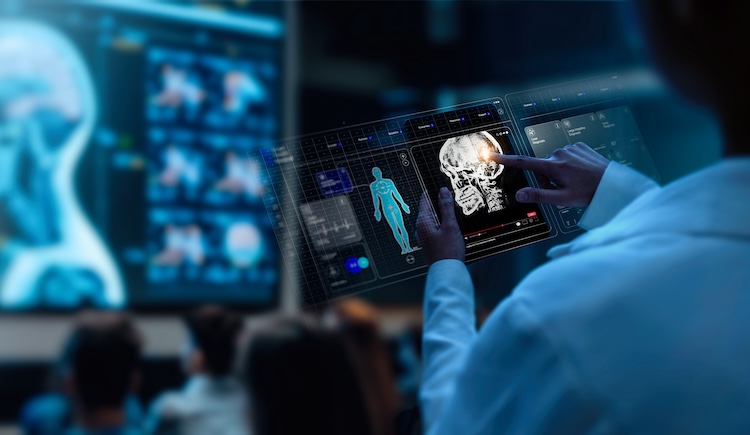
Artificial Intelligence (AI) has made profound inroads into the healthcare sector, promising to redefine the way medical professionals diagnose, treat, and prevent diseases. From AI-powered diagnostics to robot-assisted surgeries and personalized treatment plans, the integration of AI into healthcare systems has already begun to show remarkable potential. However, the true long-term success of AI in healthcare depends not only on technological advances but also on how it is integrated into existing medical infrastructure, embraced by healthcare professionals, and accepted by patients. As we look to the future, experts in healthcare and technology are weighing in on the promises and challenges of AI, offering insights into how this transformative technology can achieve lasting success in the medical field.
Discovering a Breast Lump can be alarming, but timely evaluation is essential. Not all lumps are cancerous, yet medical assessment helps determine their cause. Early detection, imaging tests, and professional guidance offer reassurance and support, empowering individuals to make informed decisions about their breast health.
1. AI as a Tool for Enhancing Diagnoses
One of the most touted benefits of AI in healthcare is its ability to enhance diagnostic accuracy. AI systems can analyze medical images—such as CT scans, MRIs, and X-rays—far more quickly and precisely than the human eye. In fact, studies have already demonstrated that AI algorithms can match or even exceed human radiologists in diagnosing certain conditions, such as detecting tumors in breast cancer screenings or identifying anomalies in brain scans related to strokes or neurological diseases.
Experts agree that AI will play a pivotal role in diagnostics, particularly by reducing human error and providing a second layer of analysis. Dr. Eric Topol, a prominent cardiologist and expert in AI, argues that AI could serve as a powerful assistant to doctors, helping them interpret diagnostic images and making more informed clinical decisions. “AI isn’t here to replace doctors, but to augment their abilities and free them from repetitive, mundane tasks,” says Dr. Topol. With the assistance of AI, medical professionals can focus on more complex aspects of patient care, leading to better outcomes.
Long-term success in this area will hinge on integrating AI systems into clinical workflows in a way that ensures they are accessible, reliable, and user-friendly for healthcare providers. It’s not just about accuracy but also about ensuring that AI solutions are designed to support, rather than overwhelm, medical practitioners.
2. Personalized Medicine: Tailoring Treatments for Individuals
AI’s ability to analyze large volumes of data is paving the way for personalized medicine—treatments and interventions tailored specifically to the genetic makeup, lifestyle, and health history of an individual. Experts argue that personalized care is the future of healthcare, and AI is a key enabler of this shift. With the use of AI algorithms, doctors can predict how a patient will respond to a specific treatment based on their genetic profile and other personal health data.
For example, AI can help oncologists determine which cancer drugs will be most effective for a particular patient based on the genetic characteristics of their tumor. In pharmacogenomics, AI is already helping identify genetic markers that predict patient responses to various drugs, reducing the risk of adverse reactions and increasing treatment effectiveness.
Dr. Atul Butte, a leading researcher in biomedical informatics at UCSF, highlights the potential of AI in harnessing big data for personalized care: “The integration of AI with genomic data, electronic health records, and wearables can help us shift from a one-size-fits-all approach to one where every patient receives the right treatment at the right time.” However, for this to be a reality, there must be continued collaboration between data scientists, medical professionals, and regulatory bodies to ensure that AI-driven personalized treatments are both safe and ethical.
3. AI’s Role in Drug Discovery and Development
One area where AI is already showing transformative potential is in drug discovery. Developing new pharmaceuticals is a long, costly, and uncertain process, but AI has the power to dramatically shorten timelines and reduce costs. By analyzing vast amounts of molecular data, AI systems can predict which drug compounds are most likely to be effective against certain diseases, significantly speeding up the early stages of drug development.
Experts predict that AI will be especially crucial in accelerating the development of treatments for complex diseases like cancer, Alzheimer’s, and rare genetic disorders. For instance, AI algorithms can sift through millions of chemical compounds to identify promising candidates for further testing, reducing the trial-and-error approach that has historically slowed down drug development.
In addition to speeding up the process, AI can also help identify new applications for existing drugs. During the COVID-19 pandemic, AI systems were used to identify existing drugs that could potentially be repurposed to treat the virus. This ability to quickly adapt and identify solutions is one of the key factors that could make AI indispensable to the future of drug development.
However, experts also caution that AI’s role in drug discovery must be carefully managed to avoid “over-promising” its capabilities. While the technology shows great potential, regulatory approval processes and clinical testing remain vital to ensuring the safety and efficacy of AI-driven discoveries.
4. Operational Efficiency and Healthcare Administration
In addition to its clinical applications, AI has the potential to revolutionize the operational aspects of healthcare delivery. Administrative tasks such as scheduling, billing, and patient record management can be time-consuming and prone to human error. AI-powered systems can streamline these processes, reducing administrative burdens on healthcare providers and allowing them to focus more on patient care.
Dr. Regina P. Sullivan, an expert in health systems innovation, notes that AI can enhance hospital operations by predicting patient admission rates, optimizing staffing levels, and even managing inventory. “The use of AI in healthcare administration can lead to more efficient workflows, reduced waiting times for patients, and cost savings for healthcare providers,” she says.
Long-term success in this area will depend on ensuring that AI solutions are not only efficient but also scalable and secure. As AI continues to handle more sensitive data, protecting patient privacy and adhering to regulations like the Health Insurance Portability and Accountability Act (HIPAA) will be essential for ensuring trust in these systems.
5. Patient-Doctor Relationship: Augmenting, Not Replacing
While much of the discourse surrounding AI in healthcare focuses on its technical capabilities, experts are also keen to emphasize the importance of maintaining the human element in healthcare. AI has the potential to enhance the doctor-patient relationship rather than replace it. By automating routine tasks, AI can give healthcare providers more time to engage meaningfully with their patients, listen to their concerns, and offer tailored advice.
Dr. Daniel Kraft, a physician and healthcare innovator, argues that AI will serve as an assistant rather than a replacement. “The most effective use of AI in healthcare will be when it allows doctors to focus more on patient care by taking over repetitive tasks such as data entry, monitoring, and administrative duties,” he explains. In this sense, AI can help doctors become better listeners and advisors, ensuring that patients receive both the technical expertise and the emotional support they need.
6. Ethical Considerations and Long-Term Trust
Despite the many promising applications of AI in healthcare, ethical considerations remain a critical component of its long-term success. The integration of AI must be done with care to avoid biases in algorithms, protect patient data, and ensure that AI systems are transparent and explainable. The use of AI to make decisions about patient care raises important questions about accountability and responsibility. If an AI system makes an error, who is liable—the software developer, the healthcare provider, or the hospital?
Ethics experts warn that as AI takes on more decision-making functions, robust oversight will be necessary to prevent biases in AI models, especially given that healthcare systems have historically exhibited disparities in care based on race, gender, and socioeconomic status. Dr. Ruha Benjamin, an expert in technology and ethics, underscores the importance of “ethically designed AI,” one that takes into account social determinants of health and ensures that technology serves all patient populations fairly and equitably.
Conclusion
The future of AI in healthcare is undeniably promising, but its long-term success will depend on careful integration, ethical considerations, and continuous collaboration between technology developers, healthcare providers, and regulatory bodies. Experts agree that AI will transform healthcare by improving diagnostic accuracy, personalizing treatments, accelerating drug discovery, and enhancing operational efficiency. However, its ultimate success hinges on how well these advancements are implemented within the existing healthcare ecosystem and whether they can be aligned with the human aspects of care. As we move into this new era of healthcare, the potential for AI to augment and enhance our medical systems is vast—but it must be done responsibly and with an unwavering focus on patient well-being.